
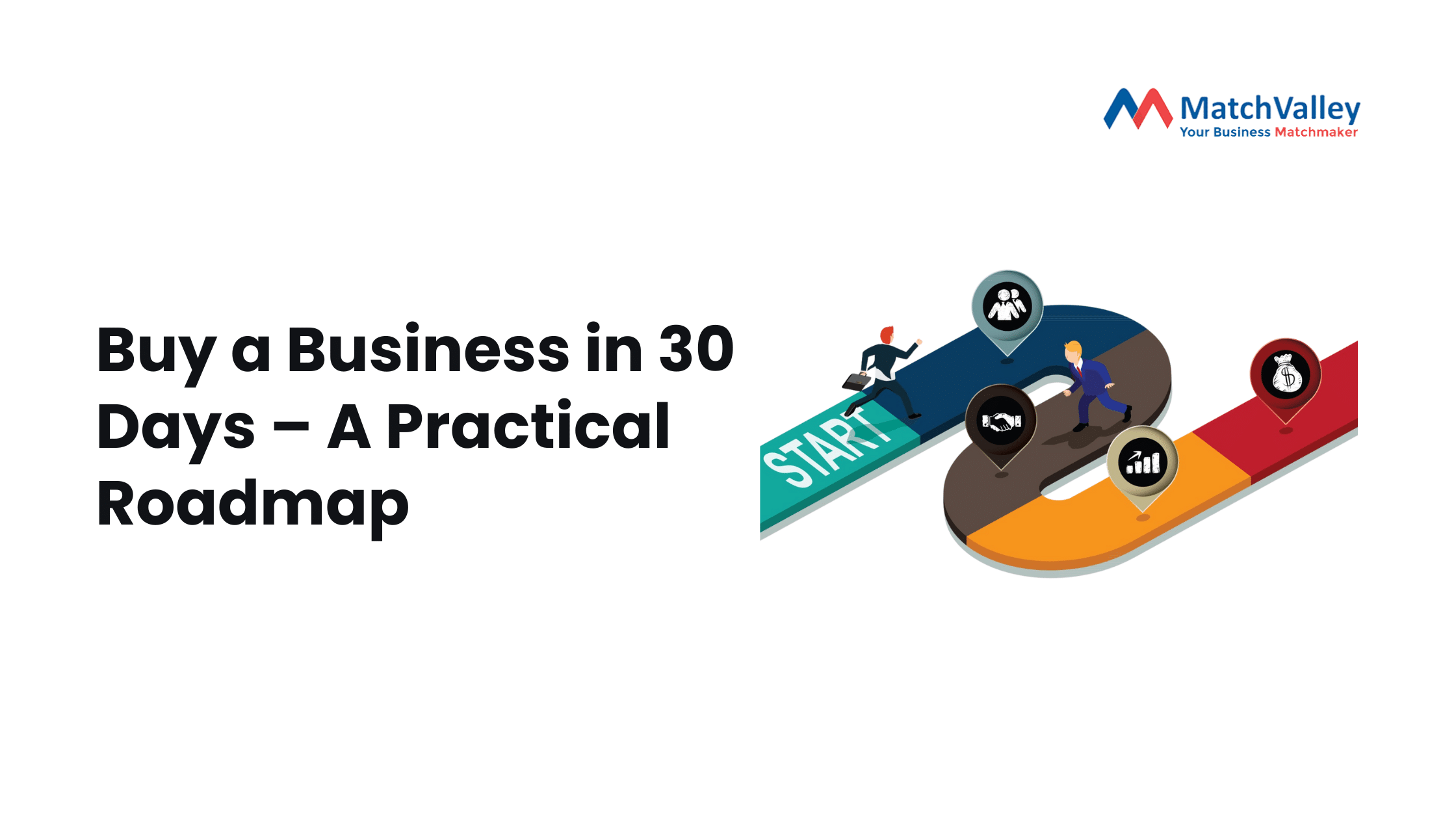
If you have ever dreamed of being an entrepreneur but dread the risk of going in blind, buying a business can be the perfect shortcut. With proper planning, frame of mind, and approach, you can effortlessly buy a business in 30 days. This blog offers a real-life, step-by-step guide to help you confidently take control, steer clear of common pitfalls, and become an entrepreneur in a month.
Why Buy a Business Instead of Starting One?
Buying a business is like getting into an already functional environment – existing customers, trained staff, continuous cash flow, and systems in place. It eliminates the threat of failure in early stages and reduces your path to profitability. But the success is in how well-prepared you are.
Let's break it down into a 4-week action plan.
Week 1: Preparation and Planning
Define Your Budget and Goals
- Determine how much you can invest (cash, loans, investor funding).
- Clarify your goals: Do you want a passive income stream? A hands-on role? A high-growth opportunity?
- Decide on industry preferences and geographic boundaries.
- Do I want to buy a franchise or an independent business?
- Do I prefer service, product, or digital-based operations?
- What level of involvement am I comfortable with?
- Business brokerage websites (like MatchValley)
- Local networking groups and LinkedIn
- Industry-specific listing portals
- Financial stability
- Industry potential
- Location
- Your compatibility with the business model
- Last 3 years’ financials
- Tax filings
- Employee and vendor contracts
- Lease agreements
- Revenue and profit trends
- Inventory value
- Debts or liabilities
- Customer concentration risks (e.g., if 80% of sales come from one client)
- Are there any pending litigations?
- Is the business compliant with local laws and tax filings?
- Are licenses and permits transferable?
- What’s the condition of tangible and intangible assets?
- Purchase price
- Terms of payment
- Transition assistance period
- Timeline for closing
- All-cash deal
- Earn-out (a portion paid based on future performance)
- Seller financing (seller allows you to pay in installments)
- Sign legal documents
- Transfer licenses, contracts, and assets
- Make initial payments
- Inform employees and key stakeholders